Chained Beasts characters: Traits, Builds, and Roles
Learn how Chained Beasts characters work: bear traits, perk builds, co-op chains, and what playtests confirm.
Picking the wrong animal in a chained colosseum run does not just change your portrait. It changes whether you want to get hit, how far your chain reaches, and which shop item is worth your last coins. Chained Beasts characters are persona kits with baked-in strengths and costs, not skins you swap for style. That is why Chained Beasts characters decide the shape of a roguelike run before the first perk roll ever appears.
Featherweight Games built the fantasy around gladiators who fight as beasts, tied at the ankle, earning freedom in a brutal arena. Public playtest notes and player footage already show how those traits collide with perks, afflictions, and co-op. If you are choosing a fighter tonight, start with the trait line, then build the rest of the run around it.
Animal Personas Are the Build, Not the Costume
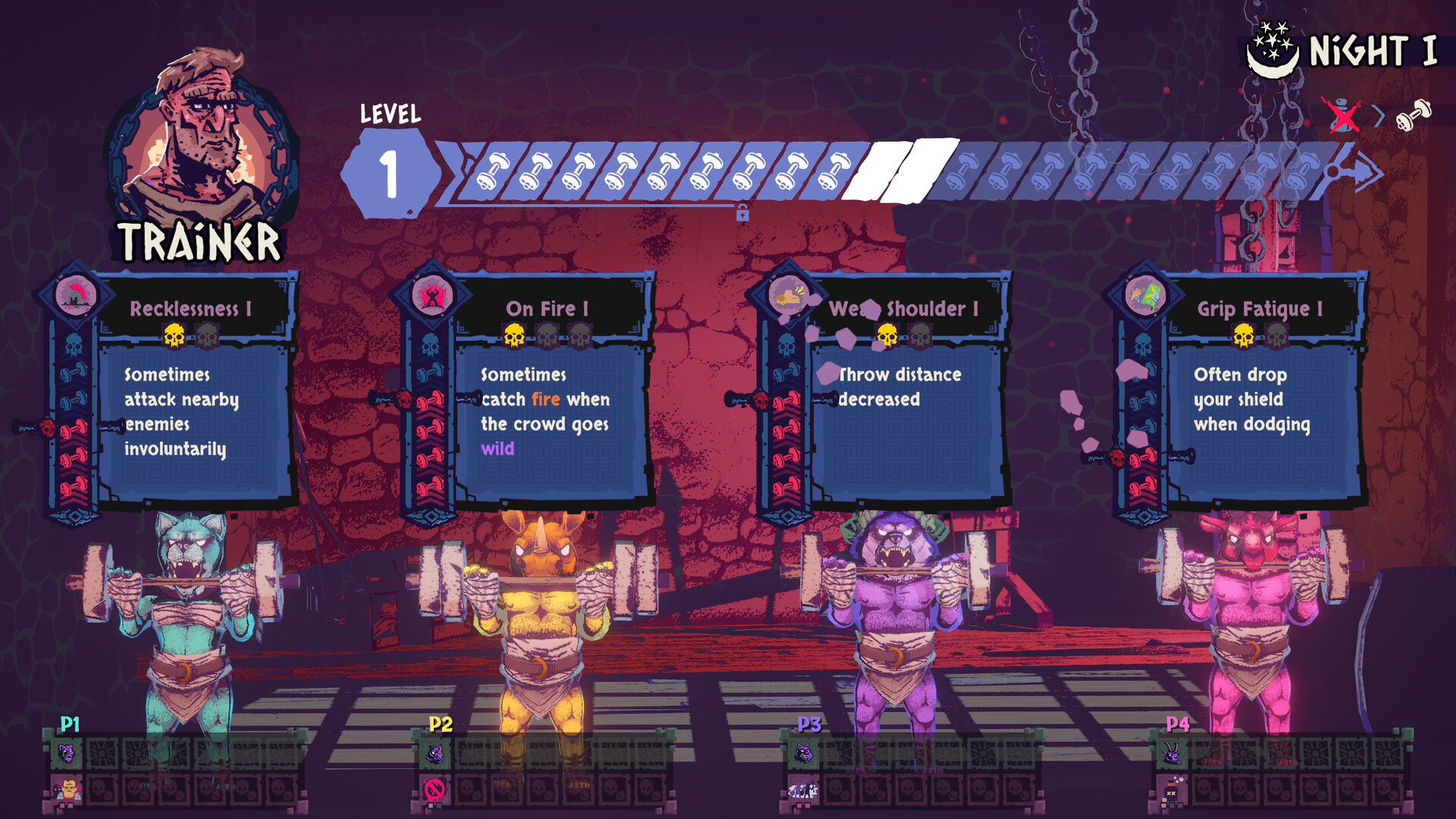
Combat is a measured twin-stick brawl. You swing, charge, and lob whatever you are holding along a lit throw arc. Waves pay out coins for weapons and armor, then an automated level-up offers perks. Clears also hand you buffs and debuffs. The animal underneath those systems decides which offers are actually good.
Official screenshot · Source: Steam store
A hands-on from the 2025 playtest described the pitch cleanly: you wear a beast, you fight soldiers, and the chain is the feature people underestimate. In local co-op, up to four players link at the ankle and have to attack while the tether pulls back. Solo, that same session found no bot teammate. You drag a heavy ball instead.
The chain is also a weapon. The reviewer ignored it for a couple of runs, then started tripping foot soldiers and tougher enemies so backstabs could finish them. Perks that grant vigor or extra damage on those knockdowns turn a restraint into a combo tool. Speed and reach decide who should step across the link to make the trip.
Think of each persona as a rule you must obey for the whole run:
- A trait that triggers when you are hit wants mitigation, fury uptime, and short-range pressure.
- A trait that rewards movement wants open lanes and fewer "stand still and trade" perks.
- A shared chain means your teammate's trait is part of your build. Their throw can be your damage.
There are almost no loose healing pickups on the floor. The playtest called that out directly: aside from objects you can throw, the arena does not restock you. Shops, training, and environmental props carry the run. Spikes, jars, loose spears, and other fighters are resources. Your persona decides whether you can afford to stand in that mess long enough to use them.
What Public Sources Confirm About the Roster
Public pages still describe Chained Beasts characters in broad strokes. The playtest says every animal has its own traits and uses lions and wolves as examples of the spread. That is a range, not a closed list of two species, and it is not a stat sheet. No source in this set publishes base health, speed, or signature moves for those examples.
The one kit with concrete trait text comes from player experience, not a wiki table. In a long build video, the creator locked a hulking bear on a hard difficulty and read the kit out loud: more health, less movement speed, plus a brief invulnerability and fury when you take damage. Treat that as community reporting from one run. It is the clearest character note available, and it is still not an official balance patch.
| Signal | What sources actually say | What you should not assume |
|---|---|---|
| Animal personas | You fight as beasts, and each has distinct traits | That every species shares one move list |
| Lions and wolves | Named as examples of the roster's range | Any specific health, speed, or ability |
| Hulking bear | More health, slower movement, short invulnerability and fury on hit | That it is the only tank, or the best pick in every mode |
| Weapons | Four weapon choices, plus throwables and charged attacks | That a weapon replaces the persona's trait |
| Party size | Local co-op up to four; solo uses a ball on the chain | That solo includes an AI partner |
For the live roster and whatever has shipped since early footage, check Chained Beasts on Steam before you plan a group around a species you only saw in a thumbnail.
Until full notes exist, compare Chained Beasts characters with three questions. What happens the moment I take damage? How fast can I cross or yank the chain? Which attack does this trait already pay me to repeat? If a perk does not answer one of those, it is a side grade.
A fourth question matters in co-op: who is allowed to be slow? A ball on a solo chain punishes you personally. A short tether between four people punishes the whole group if the front liner cannot reach a tripped target before it stands up.
Hulking Bear, the Best-Documented Kit
Among Chained Beasts characters caught on camera, the hulking bear is the only one with a readable kit. Player experience describes a brawler that wants contact. Getting hit is not only a mistake. It opens a short safe window and turns on fury. The creator built the entire run around that idea and spent the early waves fighting with ordinary weapons while hunting an all-fists plan.
| Trait piece | How the player described it | How to use it |
|---|---|---|
| Health | Higher than a default start | You can trade a hit to start the loop |
| Movement | Slower | Let hazards and throws do the chasing |
| On-hit invulnerability | Brief, and it comes with the hit | Commit to a punch, a throw, or a step, then leave |
| On-hit fury | Starts whenever you take damage | Draft perks that extend fury or cut damage during it |
Fists were weak at the start of that footage. The player said so while still picking up bows, maces, and shields. Damage arrived only after unarmed multipliers, crit lines, and a passive they called Drive It Home. That passive made a punch replay melee damage from weapons already stuck in the body. Spears, swords, and axes became setup. The punch was the detonator.
Once those pieces lined up, community reports from the same video get extreme. The creator said bosses were falling in roughly three or four hits, and later claimed a one-tap on a regular enemy. Those are highlight results from a stacked run, not a promise that every bear deletes a boss at level one. Early on, the same person was missing throws, eating spikes, and joking that punches did nothing.
Two hard limits showed up in the same session, and both should change how you copy the build.
First, a boss jump shed every embedded weapon. The combo does not persist through that animation. You have to stick new weapons and punch again. If you are solo, that means you are the thrower and the puncher, on a slow body, while the boss is moving.
Second, that run allowed one equipped item. Brass knuckles won the slot. The player kept wanting a shield and did not get both. Unarmed damage and a safety tool were competing jobs, not a package. If your shop offers armor or a shield on the same visit as knuckles, decide which job this character is doing for the next several waves.
The player also grabbed a training rule that always granted two experience while hiding strain and the resulting affliction. Levels came fast. Information did not. On a slow bear, hidden downsides like a limp, blinding brightness, or drunken aim are more expensive than they look, because you cannot simply dash out of a bad swing.
The fist loop, in order
Use this only when the bear's on-hit fury is actually your trait. Do not force it onto a persona that has no rage engine.
- Fight with found weapons until an unarmed multiplier exists. Level-one punches are a plan, not a damage source.
- When brass knuckles or a double-unarmed bonus appears, equip it and accept the empty off-hand.
- Draft fury uptime next: a bonus every few punches, fury for hitting tripped enemies, longer fury, and less damage taken while fury is up.
- Draft Drive It Home, then throw anything that sticks before you punch.
- Add crit and a short stun on punch crits after the damage exists. Control does not matter if the hit is tiny.
- After you get hit, spend the invulnerability window. Do not waste it backpedaling unless an affliction will kill you for standing in melee.
- If a boss leaps and clears embedded weapons, rebuild the throw setup. Punching an empty target wastes the passive.
In that footage, the knuckles and a specialist-style bonus were talked about together: roughly double unarmed damage, plus a line the player read as an extra 100% punch damage. Count those as stacked bonuses from one community run, not as a confirmed formula from a patch note. The direction is what matters. Unarmed hits were the multiplier, and embedded weapons were the second hit.
Perks, Gear, and Afflictions That Rewrite a Run
Random drafts are what make Chained Beasts characters diverge from their base card. Two bears can leave the same tutorial and stop resembling each other by the third shop. One is a careful chain-tripper with a shield. The other is a half-blind puncher who gains damage from every affliction they refused to cure.
The table below paraphrases perks and items the fist-build player picked up or read on screen. Wording in-game may differ. Percentages are what they reported, not a datamine.
| Piece | Reported effect | Job in the build |
|---|---|---|
| Brass knuckles and unarmed bonus | About double unarmed damage, discussed with +100% punch damage | Primary multiplier |
| Drive It Home | Punches cause embedded weapons to deal melee damage again | Turns throws into a second strike |
| Every third punch | Grants fury, described as a few seconds | Rage without waiting for a hit |
| Kung Fu-style crits | Higher punch crit chance; crits stun for about a second | Spike damage and a tiny lock |
| Half damage during fury | Less damage taken while enraged | Makes the bear's on-hit fury safer |
| Longer fury | Duration doubled, with a smaller extension later | Wider punch window |
| Fury on tripped foes | A short fury gain for hitting grounded enemies | Loops with trip chance |
| Punch trips | About a 40% chance to trip for two seconds | Sets up backstabs and fury |
| Longer stuns | Stuns last about 50% longer | More time to execute or throw |
| Damage per affliction | About 3% damage for each affliction | Pays you for a messy training path |
| First backstab | About a two-second stun the first time you backstab each enemy | Opens anyone you walk behind |
| Shop discount | Future shop prices cut by about 40% | Economy, not damage |
| Flat training XP | Training always gives two experience, even on a bad roll | Fast levels with a blind cost |
A few of those rolls also mentioned rage crit chance around 35% and extra fury time measured in seconds. The player thought stacked crit bonuses made punches crit almost constantly. Believe the pattern, not a single final crit number. The pattern is: fury uptime, unarmed multipliers, then crit, in that order.
Afflictions are the tax. Training in this game is not a free level. You roll, you gain power, and you often accept a drawback. Some drawbacks are jokes until you are the slowest body in the pit.
| Affliction the player described | What it does to a slow brawler | Practical call |
|---|---|---|
| Scene is too bright | Targets and tells get harder to read | Skip unless the reward is huge |
| Cannot walk straight | Throws and spacing fall apart | Bad on a gamepad; still bad on a bear |
| Severe limp, no distant pickups | You cannot scout loot or exits | Fine only after you stop needing gear |
| Damage if you deal none for several seconds | Standing around hurts you | Acceptable if you are always swinging |
| Slightly shorter chains | Trip range shrinks for everyone | Costly in co-op, minor if you are solo with a ball |
| Hidden training result | You do not see strain or the affliction you just took | Great XP, poor information |
Player experience from that run is a useful warning. The creator could not always tell what they had rolled, kept fighting while "drunk," and eventually switched to mouse and keyboard because throws on a controller felt unusable. Block was a simple modifier key in that setup. If your trait already cuts your move speed, do not also blind yourself for a small experience bump.
Gold is part of character building, too. At one shop the player had 49 coins, could not afford the piece they wanted, and chose to save instead of panic-buying. That is the right instinct when knuckles, a shield, or a price-cut perk might show up later. A random paid skill gamble, which they saw priced around 79 gold for an uncertain result, is how a bear stays poor and still unarmed.
One more economy note from the same footage: a perk that stops experience from decaying at the end of training. They passed on some comfort perks to keep leveling. Do that when a numeric goal matters. In their case, level 20 was tied to an unlock, and they talked about hitting it before the last fight. Afterward they showed a cosmetic look they called Invictus. Chase the unlock after the combat loop works, not instead of it.
Four playstyles, and who they fit
| Playstyle | Core idea | Persona fit | Main risk |
|---|---|---|---|
| Chain-trip backstab | Yank the chain, drop foes, stab | Any animal; better with speed and reach | Short-chain drawbacks and slow turns |
| On-hit fury brawler | Eat a hit, become briefly safe, punch | Hulking bear, as documented | No shield if knuckles take the only slot |
| Throw, then detonate | Stick weapons, punch to replay melee damage | Bear, plus anyone who can feed throws | Boss moves that clear embedded gear |
| Shop tank | Discounts, armor, heavier swings | High-health personas | Low damage if you never take a multiplier |
Heavier swings showed up as a perk the player was happy to take even while planning fists. Armor showed up late, including body armor they specifically wanted. Those are legal pivots. A bear does not have to stay a puncher if the draft offers a better weapon plan. The trait still cares about getting hit, so heavier hits and extra health keep paying you.
Crowd bonuses are the other pivot. The player saw extra damage while the crowd was going wild and read other lines tied to that state. If your clear speed already keeps the audience hot, those perks are free damage. If you are slow and getting chain-tripped yourself, you may never see the bonus. Match the perk to the pace your animal can actually keep.
Solo Ball, Co-op Chains, and Role Splits
Chained Beasts characters in a linked group share one length of chain and one set of knockdowns. The fist player said the dream version of their build was a party: everyone sticks spears, swords, or axes in the same target, then somebody punches and replays all of that melee damage. That is a role split, not four people doing the same job.
| Mode | How the chain behaves | What to value in a persona |
|---|---|---|
| Solo | A heavy ball instead of a partner | Self-sufficient traits you can trigger alone |
| Duo | Two players tied at the ankle | One trippers, one finisher, different speeds |
| Three or four | Local link of up to four | Embed, punch, execute, and anchor as separate jobs |
| Short-chain modifier | Player saw chains get slightly shorter | Positional traits matter more; long flanks fail |
Solo is not a lesser mode, but it is a different one. You cannot ask a friend to embed a spear while you stay in fury. You also cannot be rescued if an affliction makes you swing at the wrong time. The playtest still found solo entertaining, with basic attacks, charged hits, and throws carrying early rounds. The difficulty spike came from empty floors and from forgetting the chain. Use the ball. Trip people. Backstab them. Then spend coins so the next wave is not the same naked kit.
Co-op is where a slow, sturdy animal becomes a specialist instead of a liability. Put the bear near the pile of bodies and the hazards. Let a quicker persona, whatever species you actually unlock, cross the tether, loot, and stick weapons. Call the punch. If two players both try to be the unarmed carry, you have spent two equipment slots on knuckles and nobody is throwing.
A clean pick order for a new run:
- Read the trait on the select screen before you raise the difficulty. If it rewards damage taken, plan fury and mitigation. If it does not, plan avoidance and chain trips.
- Buy a weapon you can both swing and throw. The four weapon families are tools, even in a fist build. The bear video is full of maces, spears, axes, and shields used as setup.
- Take one perk that matches the trait before you take a novelty perk. Unarmed damage without fury uptime was a slow, ugly start in that community run.
- In co-op, assign embed and detonate out loud. Overlapping jobs waste the chain and the single equipment slot.
- If an affliction hides information, ask whether the experience is worth fighting half-blind on a body that already moves slowly. Brightness, missing pickup icons, and unseen training results fail that test more often than a small limp does.
- Save gold when you are one purchase short of the item your trait needs. A discount perk is worth more than a random weapon you will drop for knuckles anyway.
- Rebuild after every death. The persona stays. The perks, the afflictions, and the one equipped item do not.
Environmental kills still belong in every character plan. Player footage leans on spikes, snake jars, and throws that shove one soldier into another. Those are not bear-only tricks. They are how you create a backstab or an execute when your damage perk has not arrived. A high-health animal can risk the hazard. A faster one should bait the enemy into it and step out.
If you only remember one comparison, use this. Chain trips are the universal technique the playtest found, and they work before you have a build. On-hit fury is a documented bear technique, and it needs perks before it feels broken. Pick the universal plan while you learn the arena. Pick the bear plan when the draft is actually offering fists, fury, and a way to stick weapons in people.
FAQ
How many Chained Beasts characters are playable?
These sources do not publish a final roster size. Playtest coverage says each animal has its own traits and points to examples from lions to wolves. Player footage documents the hulking bear and little else by name. Check the Steam listing for the current count, because a playtest cast can grow or get renamed before release.
Is the hulking bear the strongest option?
It is the best-documented brawler in community reports, not an official top tier. Extra health, slower movement, a short invulnerability, and fury on hit made an unarmed build possible after knuckles, crit perks, and Drive It Home lined up. Another persona could be better with ordinary weapons or in a fast co-op group. Judge the trait against your draft, not against a highlight reel where bosses died in a handful of punches.
Can you run a persona solo?
Yes. The playtest had no AI partner. Solo shackles you to a heavy ball, while local co-op links up to four players. Solo favors traits you can trigger by yourself, such as the bear's on-hit fury. Co-op favors traits that set a teammate up, including trips that expose a backstab or throws that stick until someone else punches.
Do builds stay glued to one animal forever?
No. The persona is the foundation, and the run writes everything else. Shops, a single equipped item, perk drafts, and afflictions can turn the same bear into a careful tank or a puncher who cannot see pickups across the arena. Expect to rebuild after a failed attempt. Keep the trait. Let the unlucky rolls go.
Related Guides
Chained Beasts All Beasts: Roster, Unlocks, Variants
Chained Beasts all beasts guide: eight unlockable fighters, variants, cosmetics, and what launch sources actually confirm.
Chained Beasts all characters: traits and unlocks
How Chained Beasts characters differ by traits, variants, and unlocks, and how chains, afflictions, and builds change every run.
Chained Beasts best character: Bear Punch Guide
See why players call the hulking bear the Chained Beasts best character, with punch perks, fury uptime, and training tips.
Chained Beasts full release date: Oct 15, 2026
Chained Beasts full release date was October 15, 2026. Check price, co-op setup, the sale window, and the update roadmap.
Chained Beasts console: PS5 Co-op Gladiator Guide
Plan a Chained Beasts console run on PS5: chain co-op, arena tools, wounds, bosses, and tips before you gather a party.