Chained Beasts demo: Co-op Arena Survival Guide
See what the Chained Beasts demo trailer reveals about four-player arena co-op, chain combat, risky elixirs, and a practical first-session plan.
The arena does not care how clever your build looks on paper. It cares whether four people can stay alive long enough to spend what they earn. The Chained Beasts demo is the first public look at that bargain: a co-op gladiator run for up to four players, built around a chain that can save you or drag the whole party down. If you only have one evening with friends, the Chained Beasts demo matters because it compresses the full loop—survive the day, buy dangerous tools, and heal in ways that can backfire—into a session you can judge for yourself.
This guide sticks to what the official launch trailer actually shows, then turns those beats into a practical first-session plan. It does not invent patch notes, store rankings, or community win rates. Where a detail is still unknown, it stays labeled that way.
What the launch trailer actually confirms
The only reference available here is the official Chained Beasts demo launch trailer. Treat everything below as trailer-based, not as a finished manual.
Official screenshot · Source: Steam store
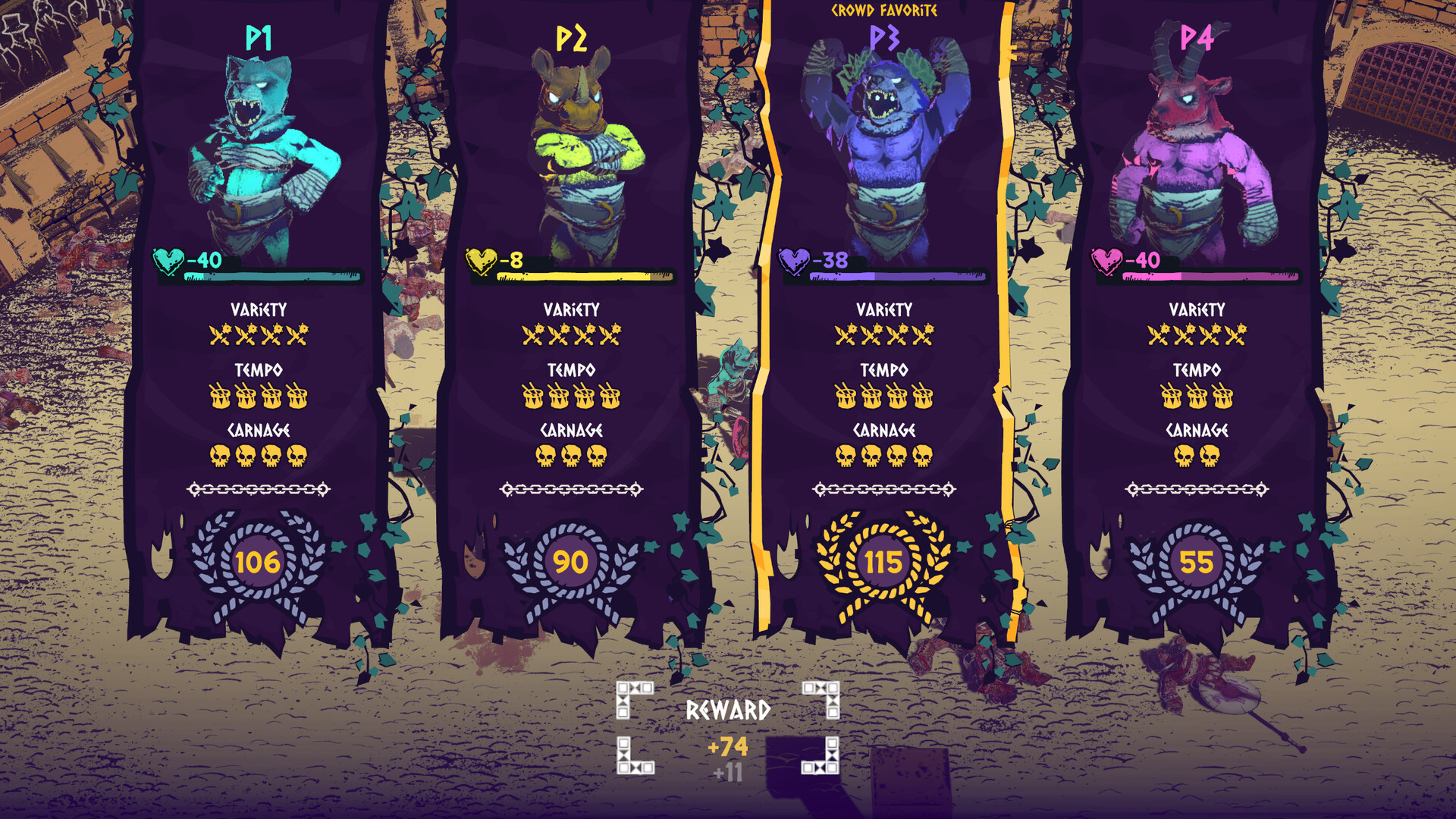
The narration frames a co-op gladiator life for as many as four “ferocious friends.” The pitch is not a lone hero clearing a ladder. It is a shared sentence in an arena that wants a show. You are told to learn how to turn the chain on your foes, with a direct warning that the same chain will drag you down if you fail. Between fights, the day has to be survived. Coin is spent on deadly items meant to feed the crowd’s appetite for blood. Wounds can be closed with foul elixirs, and those drinks carry side effects. The closer is blunt: only the strongest last, so you fight through pain, let the beast out, and turn on the masters who enchained you.
That is a complete fantasy loop in under a minute. It is also a thin evidence set. Genre labels, control schemes, run length, and difficulty options are not stated in clean on-screen terms in this source. A spoken line that sounds like “roguelite” should be heard as a survival-and-spend structure, not quoted as official store copy. Transcription glitches are common on trailer audio, so this article paraphrases themes instead of treating every syllable as canon.
| Trailer beat | What it implies for a demo | Confidence |
|---|---|---|
| Up to four players | Squad size is a feature, not an afterthought | High — stated outright |
| Turn the chain on foes, or be dragged | Positioning is a shared resource | High — central warning |
| Survive the day, then spend coin | Combat and a shop or prep phase alternate | High — stated as the loop |
| Deadly items for the crowd | Purchases are spectacle as well as power | Medium — tone is clear, UI is not |
| Putrid elixirs with side effects | Healing is a gamble, not a free reset | High — warning is explicit |
| Kill or overthrow the masters | A rebellion fantasy sits under the arena show | Medium — theme, not a mission list |
Use that table as a filter. If a tip later in this article is not tied to one of those rows, it is a planning habit, not a claimed mechanic.
Why a four-player chain changes every decision
Most co-op games fail in demos for a social reason, not a balance reason. Someone sprints, someone loots, and the third player spends the night reviving. A chain, if it behaves anything like the warning suggests, punishes that split. The tool that lets you yank an enemy is the same tool that can haul a teammate into a bad pocket of the sand.
Think of the chain as a shared verb with two outcomes:
- Offense: you close distance, interrupt a dangerous foe, or stack bodies where your best damage already is.
- Liability: you overextend, and the person on the other end inherits your mistake at full speed.
That is why the Chained Beasts demo is more interesting as a communication test than as a highlight reel. Four players do not need four identical roles. They need a rule for who initiates a pull. Without that rule, the “drag you down” line stops being flavor and becomes the run.
A simple callout set is enough for a first night. Keep it short so it survives a loud arena:
- “Pull” means someone is about to commit the chain.
- “Hold” means do not add a second pull on top of the first.
- “Break” means disengage even if coin or a kill is sitting in the open.
- “Drink” means an elixir is going in, so allies should expect a downside, not a clean heal.
| Role sketch | Job during a fight | Job between fights | Failure mode |
|---|---|---|---|
| Anchor | Stays near the group’s center | Names the next buy | Chases a solo kill and yanks everyone |
| Striker | Follows a confirmed pull | Asks for damage tools first | Burns coin on duplicates |
| Warden | Watches flanks and downed allies | Tracks who is hurt | Heals too early and eats the side effect at full health |
| Caller | Makes one pull call at a time | Ends the shop before the day clock, if one exists | Talks over every decision |
These are planning roles, not classes confirmed by the trailer. If the demo reveals fixed fighters, drop the labels and keep the jobs. The jobs are what stop four friends from all grabbing the shiny weapon.
A chain etiquette that survives a bad round
Agree on one initiator per fight until you have seen the chain’s range. A second person pulling “to help” is how parties clip themselves into a crowd. After a wipe, name the decision that caused the drag in one sentence, then move on. Long arguments burn the only resource a demo really gives you: time to see the loop twice.
Coin, the crowd, and elixir side effects
The trailer’s economy is emotional as much as numerical. You spend coin on deadly items “to quench the crowd’s thirst for blood.” That line suggests purchases are part of the performance. A quiet, optimal item might be weaker in this fiction than a loud, cruel one. Until the demo proves otherwise, assume spectacle and survival are scored together.
Elixirs are the sharper lesson. Healing that is described as putrid, with a warning to beware side effects, should not be treated like a potion you tap at 40% health out of habit. In games with cursed recovery, the downside often matters more than the heal amount: a slow, a friendly-fire window, a visual distortion, or a later crash in stats. None of those specific curses are confirmed here. The confirmed part is the tradeoff itself.
| Choice | Upside the trailer points to | Risk to plan for | When to lean in |
|---|---|---|---|
| Deadly item | More kill pressure, happier crowd fantasy | Coin spent before you know the next fight | After you have seen at least one enemy pattern |
| Putrid elixir | Wounds close so the day continues | Side effect can lose the next exchange | When a downed player would end the run |
| Saving coin | Flexibility for a later, clearer buy | Underpowered round if the crowd or enemies scale | Early, while you are still learning spacing |
| Aggressive chain use | Turns the restraint into a weapon | Party gets dragged into focus fire | Only with a called initiator |
A useful demo habit: write down the first side effect you actually see, in plain words, the moment it happens. “Vision pulsed” or “movement reversed” beats a vague memory of “the drink was bad.” Your second run should be built around avoiding that specific cost, not around a generic fear of healing.
Do not chase a perfect economy on run one. The trailer’s order of operations is survive, then spend, then live with the medicine. Players who invert that—shopping in their heads during the first brawl—miss the spacing lesson the chain is trying to teach.
A first-session plan you can finish in one night
Set a boundary before you launch. Ninety minutes is enough to learn whether the Chained Beasts demo respects your time. Two hours is the ceiling if someone is new to arena co-op. Longer than that, fatigue makes chain mistakes look like bad design.
| Block | Minutes | Goal | Stop rule |
|---|---|---|---|
| Setup | 10 | Voice check, roles, pull words | If voice is broken, do not start a four-stack |
| Blind run | 25–35 | Finish or fail one day cycle without pausing to theorycraft | One wipe discussion, then continue |
| Notes | 10 | List enemies, item names, elixir downside | No builds longer than three bullets |
| Second run | 25–35 | Change one decision only | If you change five things, you learn nothing |
| Debrief | 10 | Keep or drop for a longer session later | One sentence each |
What to watch on the blind run
- Who gets dragged, and whether the chain was a pull or a panic click.
- Whether coin persists after a failed day. The trailer does not say. If it does not persist, early greed is expensive.
- How fast the crowd’s “thirst” shows up. Is it flavor text, a meter, or a spawn of harder foes? Mark it unknown until you see it.
- Whether elixirs can be shared, wasted, or forced. Inventory rules are not in the trailer.
One change on the second run
Pick a single experiment from this list. Stacking experiments feels productive and teaches nothing.
- Call discipline. Only the anchor says “pull.” Everyone else may suggest, not commit.
- Heal threshold. No elixir above half health unless a player is already down.
- Buy delay. No item until the party has seen two distinct enemy behaviors.
- Spacing. The striker stays within a spoken distance of the anchor, even if a kill is free on the edge.
If the second run feels cleaner, the system is readable. If it feels random, note whether the randomness came from elixir side effects, enemy mix, or the chain’s physics. Those are different problems. A demo that hides which one is which will feel unfair even when the fiction is strong.
Example, not a reported result: a party that spends its first coin on four copies of the same blade learns less than a party that buys one damage tool and one answer to being dragged. The trailer promises deadly items, plural. Diversity is the hypothesis. The demo is the test.
What you should not pretend the demo has proven
Helpful coverage is honest about gaps. As of this write-up, the reference set is a single trailer. There are no web pages in that set, so there is no player experience and no community reports to summarize. Do not treat forum confidence, tier lists, or “best build” posts as if they were part of the source. If you later read those, label them as player experience and check them against what you saw.
| Topic | Status from this source | How to handle it in a review or party chat |
|---|---|---|
| Player count | Up to four is stated | Test three as well as four if the lobby allows it |
| Chain as weapon and hazard | Stated as the core lesson | Judge feel, not marketing adjectives |
| Day survival and coin shop | Stated as the loop | Time one full day before you score the game |
| Elixir side effects | Warned, not itemized | Record the first real downside |
| Masters as antagonists | Thematic closer | Do not assume a specific final boss |
| Platforms, price, save rules | Not in this source | Look up the store page yourself before you quote them |
| Balance and difficulty | Not in this source | Your two runs are a sample, not a meta |
That last row matters for SEO noise as much as for play. A demo launch trailer is an invitation, not a balance patch. Strong claims—“broken,” “solved,” “mandatory item”—need more than one evening and more than one squad.
If you publish your own notes afterward, describe what you did: party size, how many days you saw, and which side effect you personally triggered. That is more useful to the next group than a vague rank. It also keeps your write-up aligned with what the Chained Beasts demo can actually show in a short sitting.
FAQ
Is the Chained Beasts demo solo-friendly?
The trailer sells co-op for up to four friends and builds its warning around a shared chain. Solo play is not confirmed in this source. If a solo option exists in the build you download, expect the drag risk to feel different when you are the only body on the chain. Judge that mode on its own, and do not assume four-player tips transfer one-to-one.
What should we buy first?
Nothing is confirmed as a best item. The trailer only says you spend coin on deadly items and that the crowd wants blood. On a first clear look, delay the purchase until you have seen how a fight actually ends. Then buy one tool that answers the mistake you just made, such as extra kill pressure if foes lived too long, rather than four matching toys.
Are the elixirs safe to use whenever someone is scratched?
No. The narration tells you to heal with putrid elixirs and immediately warns about side effects. Scratch damage is a poor reason to drink. Save the elixir for a wound that would otherwise end the day, and tell the party before you do it so they can play around the downside.
How long does a session need to be to judge the game?
Plan on two runs inside about ninety minutes: one blind, one with a single rule change. That is enough to see whether chain calls, coin, and risky healing form a loop you want to repeat. It is not enough to declare a meta, a difficulty curve, or a final verdict on the masters the trailer asks you to overthrow.
Related Guides
Chained Beasts Demo Download: Steam Guide 2026
Download the Chained Beasts demo on Steam, check PC specs, and learn what the 2026 co-op gladiator roguelike demo includes.
Chained Beasts demo multiplayer: Co-Op Guide
Learn how Chained Beasts demo multiplayer works: chains, afflictions, shared loot, crowd bonuses, and co-op tips from a full four-player run.
Chained Beasts demo steam: Play Before You Buy
See how to grab the Chained Beasts demo on Steam, what the co-op gladiator roguelike tests, and if the $12.99 launch sale is worth buying.
Chained Beasts full release date: Oct 15, 2026
Chained Beasts full release date was October 15, 2026. Check price, co-op setup, the sale window, and the update roadmap.
Chained Beasts switch: Co-Op Arena Survival Guide
See how Chained Beasts switch plays in online co-op: chains, afflictions, crowd favor, and handheld tips before you buy.