Chained Beasts ps5: Arena Guide for Players
See how Chained Beasts plays, how chained co-op works, and what PS5 players should confirm before buying this gladiator roguelike.
Why the PS5 Question Starts With the Systems
People typing Chained Beasts ps5 are usually trying to decide if a chaotic gladiator roguelike is worth a console evening with friends. It matters because the pitch is not a standard action game: movement, positioning, and a shared chain can ruin or save a run. Chained Beasts ps5 interest also collides with a thin public record, so the useful move is to study the systems the studio actually describes and then verify the storefront yourself.
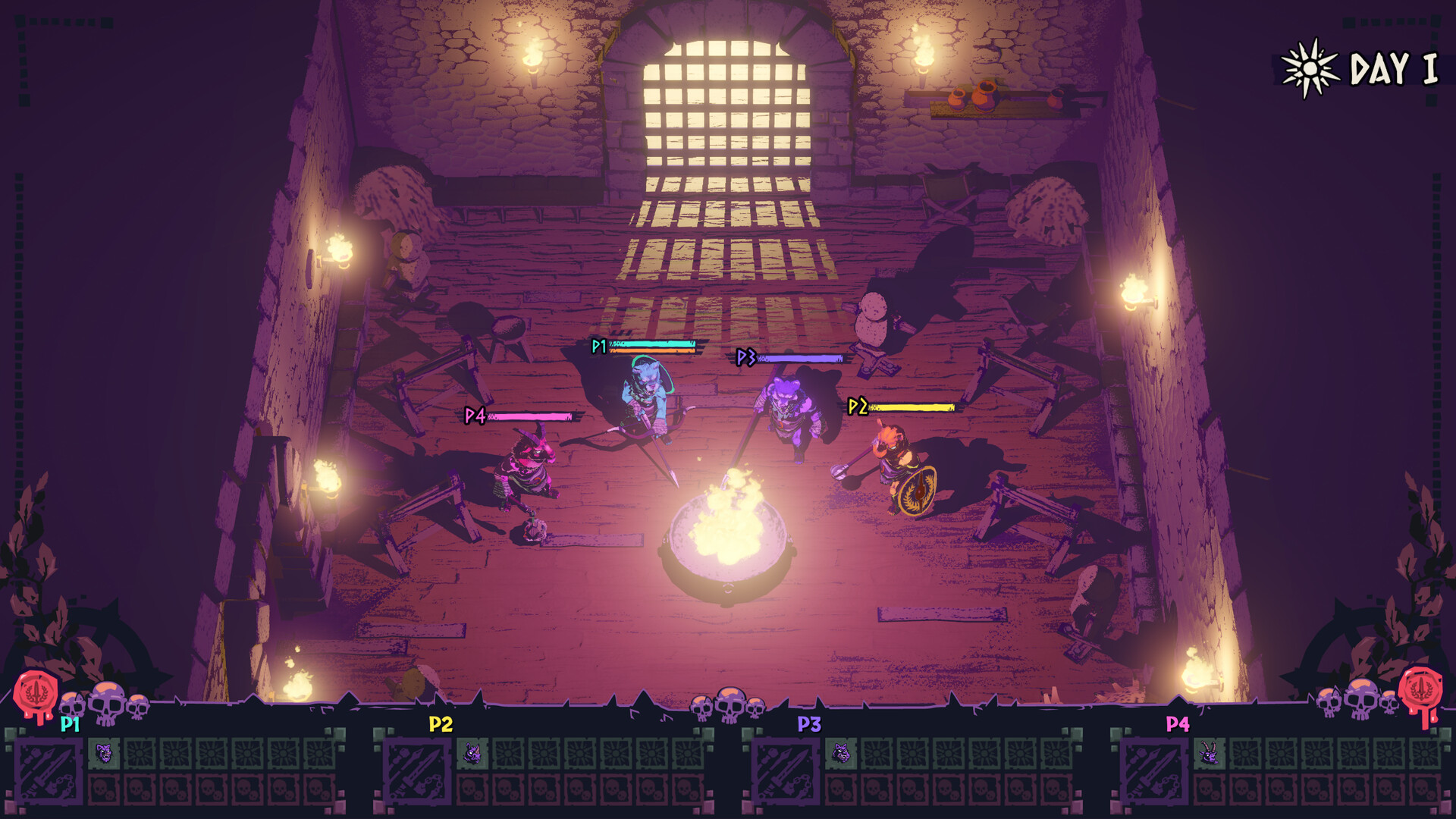
Official screenshot · Source: Steam store
As of October 18, 2026, the clearest primary source is the official Chained Beasts page from Featherweight Games. That page explains the fantasy and the rules of the arena. It does not, in the material reviewed here, print a platform list, a price, a frame-rate target, or a PlayStation 5 feature set. The same research set included no videos, so this guide does not borrow unverified clips or label guesses as community reports.
Until a live storefront lists the game, Chained Beasts ps5 is a search phrase, not proof of a product page. If a trailer caption, a forum post, or a storefront mirror disagrees with the studio page, trust the studio page and the official PlayStation listing you can open yourself.
The game, as described, is a gladiator roguelike about living through repeated days in an arena while your name gets louder. You can cut opponents up close, or you can turn the room into the weapon. The long climb points toward Rome, and toward a personal ending: freedom, or revenge. Fame is not just a score. It is how meaner champions get invited into your life.
| Pillar | What the studio stresses | What it changes for you |
|---|---|---|
| Arena fighting | Blades, thrown gear, and the room itself | Spacing matters as much as damage |
| Linked friends | A group chained in cruel, clever ways | One bad sprint can tie everyone up |
| Famous bosses | Better-armed arena stars as you rise | Expect the odds to be stacked |
| Lasting injuries | Limps, lost sight, private visions | Debuffs outlive the fight that caused them |
| Forged skill | Abilities, crowd favor, gold, gear, new fighters | Every run is meant to fork |
That table is a reading of the feature overview, not a patch note. Damage numbers, shop prices, and drop rates are not in the text, so any build guide that quotes them is inventing a meta.
Fighting With Steel, Props, and the Room
Combat is built to be messy on purpose. Hack through a fighter, or make the set do the work. Loose pottery can be thrown at someone, and someone can be thrown at the pottery. A charge can finish against a wall of spikes or inside a pit full of snakes. Range exists because you can hurl a weapon, but an empty hand in that pit is an emergency.
That last rule is the most useful combat lesson in the whole pitch. A throw is both an attack and a lost tool. If the blade leaves your grip, the next second depends on whatever else you were already holding.
| Approach | When it shines | How it fails | Habit that prevents it |
|---|---|---|---|
| Close cutting | The target is in reach and you still have a spare weapon | You get stuck in a long trade | Swing when the chain gives you a clean angle, not whenever you can |
| Thrown weapon | A dangerous foe stands across a hazard | You miss and stand unarmed | Throw only with a second weapon on your body or on the ground beside you |
| Prop throw | Urns and loose objects are in arm's reach | The object breaks and the enemy does not | Use the prop to interrupt, then finish with steel |
| Environmental shove | Spikes, a drop, or snakes sit behind the target | You charge the wrong way and eat the hazard | Name the hazard out loud before anyone moves |
| Mixed scramble | The room is cluttered and the chain is tight | Everyone improvises a different plan | Pick throw, shove, or cut, and hold that plan for a few seconds |
Picture a four-second choice. An urn is on your left, spikes are behind the nearest fighter, and a second blade is already on your belt. The higher-percentage play is the shove. The throw becomes the right call only when the hazard is behind you, not behind them, or when you cannot reach a clean charge without crossing the chain.
Three habits cover most early collapses:
- Name the hazard before you move. "Spikes left" beats a vague "go."
- Count weapons the way you count healing. A throw without a spare is a self-stun.
- Let the room shorten a long fight. Snakes and spikes do not care how famous the target is.
None of this needs hidden stats. It follows from the tools the overview actually lists. If a later patch adds ranged classes, magic, or a block button with specific timing, update your habits from the new notes rather than from this reading.
The Chain Is the Co-op System, Not a Joke
The social pitch is literal. You are told to bring four friends, and the group is chained together. Bad timing wraps that line around a column, or around something worse. Shared timing can trip enemies and flip a scrum you were losing.
Read "four friends" slowly. In ordinary English that is you plus four others, which suggests five people on one chain. Promotional lines are sometimes loose about whether the host is included. The overview also never says whether play is on one couch, online, drop-in, or some mix. Those are listing details. Do not infer them from a combat paragraph.
| Group behavior | Likely result | What to try instead |
|---|---|---|
| Each player chases a different target | The line snags on pillars and bodies | Mark one focus target |
| Everyone retreats at once | The knot collapses into the party | Assign one anchor who barely moves |
| A shared step and a shared shove | Enemies trip; hazards come into reach | One caller says "step" and "shove" |
| One player sprints for loot | The chain yanks the others off balance | Loot on the way back to the group |
| Silent play | Funny accidents, few intentional trips | Keep callouts shorter than a sentence |
A Chained Beasts ps5 night, if the version you buy is local, depends on the room as much as the build. Several people need several controllers, a picture large enough to see a taut line, and a rule that only one person calls movement. If the released version is online only, the same calls still matter. They just move to a headset. The overview does not settle which of those rooms you will actually get.
Use a caller script short enough to shout over a fight:
- "Hold" means nobody changes direction.
- "Step" means the whole line moves with the anchor.
- "Shove on three" means the environmental kill is the plan, not a suggestion.
- "Weapon down" means someone is about to throw, and someone else must confirm a spare.
Then structure the first session so the failure states show up while the punishment is still small:
- Clear one easy wave without throwing anything, just to feel how the chain resists.
- Land one environmental kill on purpose.
- Practice one weapon throw only after everyone can see a spare.
- Only then chase fame, a shop, or a boss.
Groups that skip to step four learn the game by losing a long run to a pillar. Groups that respect the order learn the same lesson in one wave.
Bosses, Injuries, and How a Run Forks
Fame is the difficulty dial. As you become known, you meet brutal bosses: arena headliners who arrive better armed, and with every edge the event can give them. The overview is clear that the deck is stacked. Beating them is how you move toward Rome and toward whichever ending you are chasing, escape or payback. Nothing in the source spells out phase patterns, weak points, or a recommended level, so treat boss guides that list those as unconfirmed until you can watch the fight.
Between those peaks, the arena keeps the scars. A day of fighting can leave you limping, cost you an eye, or surround you with visions only you can see. Relief exists, and it is not kind. Potions can swap one misery for a worse one. Surgery is offered as another route, with the strong hint that the fix can be as grim as the wound.
There is a real counterweight. Time in the sand is supposed to forge you. You learn powerful skills, you win the crowd so the audience stays on your side, you bank money for equipment, and you unlock further characters with their own kits. Each run is meant to take a different path. A loadout that worked yesterday is not a script for tonight.
| Recovery path | Immediate effect | Hidden cost | When it is rational |
|---|---|---|---|
| Fight through the wound | No new side effect this minute | A limp or a lost eye taxes every exchange | The next fight is short and the crowd is already with you |
| Drink a potion | Pain eases enough to continue | Side effects can become a harsher affliction | You cannot function, and you accept a mystery downside |
| Seek surgery | A chance to address the injury itself | Framed as serious and uncertain | The debuff will ruin several upcoming days |
| Buy gear | A weapon or tool patches a hole | Less money at the next shop | Your current injury makes the old weapon unusable |
| Switch character | A new kit dodges the old weakness | You reset familiarity, and maybe the chain dynamic | The unlocked fighter matches the next boss |
When a run is going well, spend in this order:
- First, a weapon that still works if you throw or drop the one in your hand.
- Second, anything that keeps a disabling wound from deciding the next boss. A missing eye and private hallucinations are information problems, not just flavor, so the rest of the chain should describe threats the injured player may not share.
- Third, choices that keep the crowd with you. Ongoing audience support is described as help you can count on, not a one-time cheer.
- Fourth, long-term unlocks. New characters pay off after the group already understands the chain.
People asking about Chained Beasts ps5 often want a tier list of fighters. Publishing one from a feature blurb would be fake precision. No move lists and no clear best character appear in the source used here. Unlock someone, play a short run, and judge them by which injury your group can actually tolerate.
On the first visit to a shop, prefer the spare weapon over the potion. You already know that throwing without a backup ends the rally. You do not yet know what the drink will do to you. That is an example of letting known risk beat unknown relief, and it does not require a price tag.
What to Confirm Before You Commit on PS5
Console buyers need a checklist, not a mood. Linked friends, nasty hazards, and injuries that carry into tomorrow fit a shared session unusually well. They also fit a bad night if the version, the player count, or the online rules are not what you assumed.
| Question | Why it matters on a console | Acceptable proof |
|---|---|---|
| Is there a PlayStation 5 edition? | Search traffic is not a release | Studio news or the PlayStation Store |
| How many players, exactly? | "Four friends" may mean five controllers | The store's player-count line |
| Local, online, or both? | Decides extra pads versus headsets | Store features, not a trailer caption |
| Same screen or split view? | A chain is hard to read on a tiny slice | Current screenshots or the feature list |
| Performance notes? | None are in the overview reviewed here | Patch notes or a store tech label |
| Special controller features? | Do not assume haptics or trigger effects | Only if PlayStation or the studio lists them |
| Price and editions? | Not stated in the combat overview | The store page on the day you pay |
| Age rating and tone? | Injury, surgery, and arena violence are part of the pitch | The official rating text |
Build any Chained Beasts ps5 plan around those rows. A plan that survives contact with the store looks like this:
- Re-read the studio page the same day you buy. Feature copy can change without a loud announcement.
- Open the PlayStation Store listing yourself. No listing means you do not have a PlayStation 5 release yet, no matter what a search snippet implies.
- Match controller count to the confirmed player count before you invite anyone.
- Keep the first run short. Wounds and bad potion rolls are designed to spill into later days, so a "quick look" can become a doomed campaign if you push fame immediately.
- Agree on a stop rule. A shared limp is funny until one player is fighting hallucinations the others cannot see.
The best Chained Beasts ps5 setup, once a version actually exists on the console, is boring in the best way: one caller, a spare weapon, a named hazard, and gold spent on today's injury instead of a fantasy build. That is a full lap around the arena, and it is enough to know whether the game fits your group.
If you remember one buying rule, make it this: recheck Chained Beasts ps5 details on the Featherweight Games page and on the live store listing. The rest of this article is about how the arena behaves after that listing is real.
FAQ
Is Chained Beasts ps5 already confirmed?
Not by the feature overview used here. That page covers combat, the chain, bosses, wounds, and growth. It does not list PlayStation 5, an older PlayStation console, or PC in the text reviewed on October 18, 2026. Count a console release as real only when the studio or the PlayStation Store says so.
How many friends does the game expect?
The pitch says to gather four friends and then be chained together. That most naturally means a five-person group, but the line is promotional. Check the current player-count label before you promise people a seat.
Is winning just a matter of better weapons?
No. Gear matters, and a thrown weapon is a real option, but the room, the chain, the crowd, and your injuries all change the fight. A group that coordinates a trip or a hazard can beat a better-armed foe. A group that wraps a pillar can lose with a full inventory.
Should I trust early community build tips?
No community reports or videos were part of the sources for this piece. Treat a "best build" as player experience only after you can see which version that player ran. Until patch notes and a real store listing exist, the studio's own description is the safer map.
Related Guides
Chained Beasts console: PS5 Co-op Gladiator Guide
Plan a Chained Beasts console run on PS5: chain co-op, arena tools, wounds, bosses, and tips before you gather a party.
Chained Beasts nintendo switch: Arena Co-op Guide
A practical look at Chained Beasts on Nintendo Switch: co-op chains, arena combat, wounds, bosses, and buying checks.
Chained Beasts Steam Deck: Status, Controls, Tips
Chained Beasts Steam Deck support is still Unknown. See controls, co-op limits, launch price, and how to test the demo on handheld.
Chained Beasts full release date: Oct 15, 2026
Chained Beasts full release date was October 15, 2026. Check price, co-op setup, the sale window, and the update roadmap.
Chained Beasts demo: Co-op Arena Survival Guide
See what the Chained Beasts demo trailer reveals about four-player arena co-op, chain combat, risky elixirs, and a practical first-session plan.