Chained Beasts release date trailer Breakdown
See what the Chained Beasts release date trailer shows about co-op chains, arena combat, wounds, and the launch day the narration never states.
A shared chain can save your squad or drag every fighter into the spikes, which is exactly why the newest arena footage is worth a careful rewatch. The Chained Beasts release date trailer matters because it shows how Featherweight Games wants four friends to fail together and win together on PlayStation 5. The Chained Beasts release date trailer also withholds a spoken launch day, so this breakdown focuses on systems you can actually practice instead of a date the narration never says.
Studio copy and the PlayStation upload describe one loop from two distances. The page lists systems in plain sections. The video compresses those systems into a short hype reel that signs off with the PlayStation slate. A headline that promises a date can still forget to say the date out loud, and that mismatch is why a scene-by-scene reading beats a rumor thread.
What the Chained Beasts release date trailer actually confirms
Put the Chained Beasts release date trailer next to the studio feature page and the overlap is the useful part. Narration pitches a co-op gladiator rogue-light for as many as four friends. The site calls the same idea a brutal gladiator roguelike and slows the pitch down into combat, chains, bosses, injuries, and growth. Both labels point to short, lethal runs rather than one long uninterrupted campaign map.
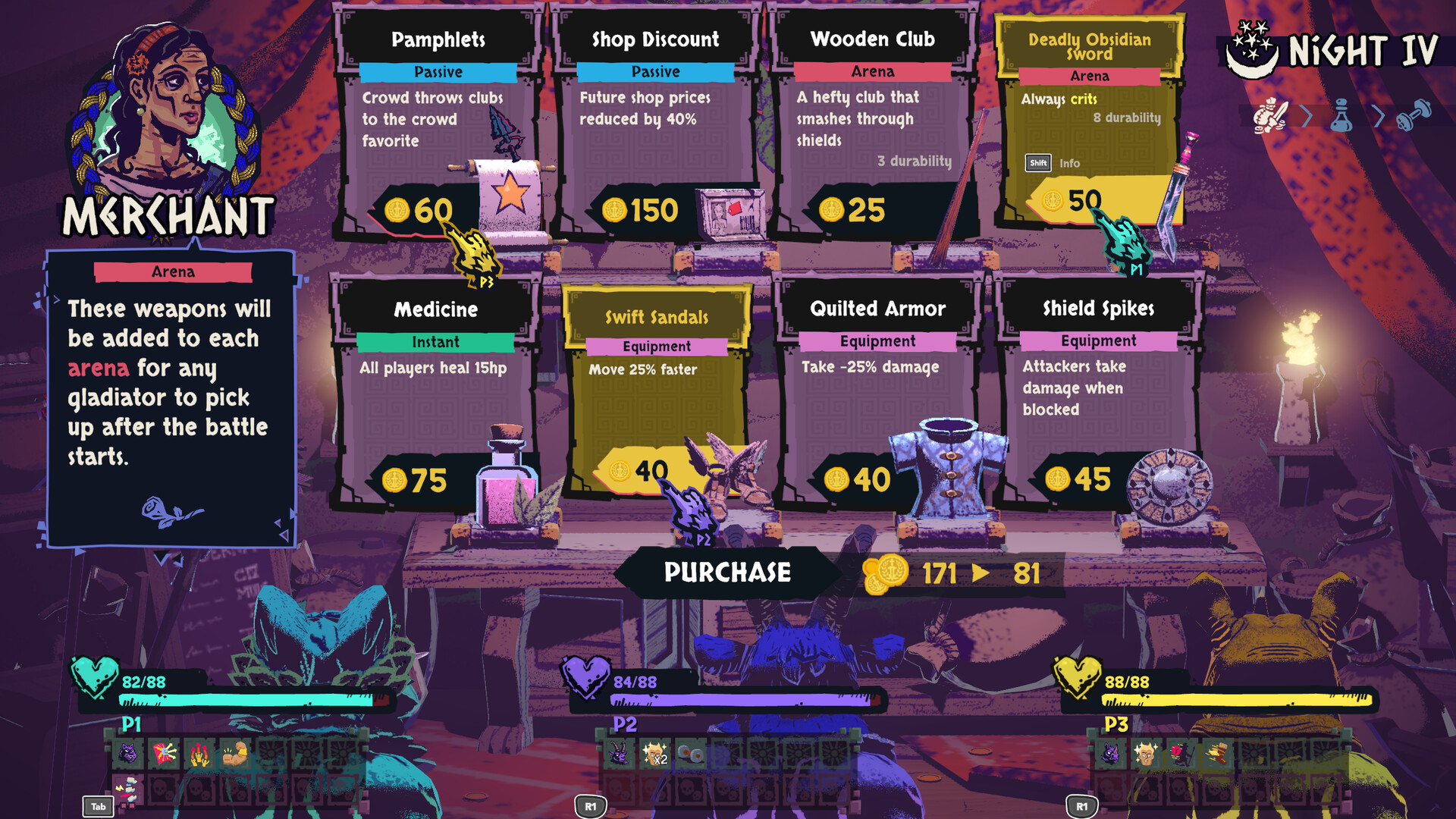
Official screenshot · Source: Steam store
The voiceover tells you to turn the tether on enemies before it hauls you down. Last the day. Patch wounds with foul remedies and respect what those remedies do next. Fight with style so the crowd stays with you, then spend coins on gear mean enough to keep that crowd entertained. The button on the reel is overthrowing the masters who stage the show, cut against a PlayStation ident. Marketing tone, yes, but it matches the page: rising fame, harder champions, and a road toward Rome that can end in freedom or payback.
What the spoken track does not do is name a month, a day, or a year. If a date exists, it has to sit in on-screen type, the video description, or a later post. Until you see it on Featherweight Games' Chained Beasts page or the PlayStation release-date upload, treat dates from anywhere else as unverified.
| Topic | Trailer narration | Studio page |
|---|---|---|
| Platform framing | PS5 games upload; ends on PlayStation | Excerpt does not list storefronts |
| Group size | Up to four friends | Four friends, chained together |
| Genre wording | Co-op gladiator rogue-light | Brutal gladiator roguelike |
| Healing | Foul remedies with side effects | Potions that can worsen problems; surgery is hinted |
| Stakes | Train, win the crowd, overthrow your masters | Fame, bosses, Rome, freedom or revenge |
How the chain rewrites four-player movement
If you only have time to watch the Chained Beasts release date trailer once, watch the feet, not the finishing blows. The fantasy is simple and nasty. You are not four free roamers who happen to share a lobby. You are leashed. Split up without a plan and the tether becomes the enemy. The studio page is blunt about the failure state: poor coordination can leave the group wrapped around a pillar, or worse. The success state is just as physical. Move together and the same leash can trip the people trying to kill you.
That is a co-op rule, not a cosmetic rope. In most squad brawlers, a bad teammate wastes their own health bar. Here a bad angle wastes everyone's footing. A dodge that would be correct in a solo action game can yank an ally into a spike wall. A greedy chase can pin the party on scenery while a boss gets a free swing. The design is asking for a caller, a shared vocabulary, and the humility to stop sprinting.
Treat early sessions like a movement drill before you treat them like a damage race. Pick one player to call direction. Pick a word for "turn the chain" and a word for "stop pulling." When someone wants to break off for a pickup, they ask, because their detour is a tug on three other bodies. If voice chat is a mess, you will feel it in the first arena, not the tenth.
These outcomes are a reading of the studio's description, not a frame-counted playtest. They are still the right habits to bring into a first session.
| Squad behavior | What the design implies | Habit to drill |
|---|---|---|
| Four people sprint different ways | The leash snags on architecture | One caller owns direction |
| Two yank, two plant their feet | The team fights itself | Agree who starts a pull |
| Timed step and a shared turn | The chain can trip foes | Use one "turn" callout |
| Solo dodge during a wide swing | Neighbors get dragged into the hit | Dodge on a count |
| Lone dash for loot | The group loses shape | Ask before you peel off |
Callouts that match the fiction
Keep the list short enough to shout over crowd noise.
- "Hold" means nobody changes the leash length.
- "Turn" means the group rotates together to catch enemies in the chain.
- "Pillar" means scenery is about to eat your spacing.
- "Blind" means someone is hit with a vision wound and needs targets called.
- "Empty hands" means a thrown weapon is gone and that fighter needs a backup plan now.
Combat, the crowd, and the coin loop
The Chained Beasts release date trailer mentions training, flair, and spending coin in the same breath, which is the build loop in miniature. The page fills in the verbs. You hack targets up close, or you let the arena do the cutting. An urn can be a projectile. A body can be thrown into that urn. A charge can end on spikes or in a pit of snakes. Weapons can be hurled for a ranged hit, with the obvious catch that you may be standing there afterward with nothing in your hands.
That last detail should change how a squad loots. A throw is not a free poke. It is a trade. If only one fighter is carrying a spare, the group should know who is allowed to toss steel and who must keep a blade for the moment the chain drags everyone into melee. Environmental kills sound stylish on a trailer because they are stylish. They are also positioning puzzles. The hazard that deletes an enemy deletes a friend who gets yanked into it.
Crowd favor sits on top of the violence. Narration frames flair and fury as how you win spectators, then frames coins as the way you buy deadlier tools to feed that appetite. The page says a won-over crowd will have your back, and that saved money buys equipment and weapons capable of swinging a fight. Read that as a mid-run economy, not as background cheers. Flashy play is a resource. Boring, efficient play might keep you alive for a minute and still leave you poor when a champion shows up armed with every advantage.
Bosses arrive as fame climbs. They are described as arena heroes with the deck stacked in their favor. Beating them is not just a health-bar trophy. Victory moves you closer to Rome and to a choice the page frames as freedom or revenge. Expect those fights to test the chain under pressure: more hazards, less room to wander, and less forgiveness for four different plans.
| Tool | What it is for | The catch |
|---|---|---|
| Urn or heavy prop | Throw it, or slam a foe into it | You can waste the only object in reach |
| Spike wall | Finish a shove | A bad pull can send a friend in too |
| Snake pit | Drop enemies into the hazard | Co-op footing gets chaotic at the edge |
| Thrown weapon | Hit someone who is out of reach | You may be unarmed on the next exchange |
| Coin shop | Buy gear that flips a fight | Style and survival both want the same purse |
A simple buy order for a first squad
Nobody outside the studio has published a tier list worth trusting. Until community reports include real drop tables, use a boring priority list based only on the risks the page already names.
- A backup weapon for whoever is expected to throw.
- Anything that helps the group stay mobile while leashed.
- A tool that creates space when a boss has every advantage.
- Crowd-pleasing flourishes only after the first three are covered.
If a shop forces a stylish toy over a spare blade, take the blade. An empty hand is a trailer highlight you do not want as your whole run.
Wounds, remedies, and why runs fork
Each day in the arena adds injuries instead of wiping the slate. The page gives concrete examples: a limp that makes movement miserable, a missing eye, or hallucinations that only you can see and that you may flail at anyway. Potions can dull pain and still leave you with a worse condition. Surgery is floated as another possible answer, without a rulebook attached. Do not invent a cost for that surgery. Just notice that the studio is advertising lasting consequences, not a clean heal-to-full button.
The trailer says the same thing in hotter language. Survive the day. Use foul remedies. Beware the side effects. Fight through the pain. For a squad, the practical translation is communication. A limp changes who should scout. A missing eye means allies have to call threats on that side. Hallucinations mean the group should confirm a target before someone burns a long cooldown on empty air. A remedy is a group decision when its downside lands on shared space.
There is a growth track beside the misery. Experience forges stronger fighters. You learn skills, buy equipment, unlock new characters with their own abilities, and take a different path on each run. That is the roguelike half of the pitch: failure is not only a game-over screen, and a second attempt is not a photocopy of the first. The chain still punishes selfish play, but the meta layer gives you a reason to finish a bad day instead of quitting at the first limp.
| Condition as described | What changes | Squad response |
|---|---|---|
| Painful limp | Positioning gets worse | Shorten routes; don't make them the scout |
| Missing eye | One side is less reliable | Call threats into the blind side |
| Hallucinations only you see | Swings may hit nothing real | Confirm the target before a big commit |
| Remedy side effect | One problem swaps for another | Ask if the new issue is playable |
| Surgery, only hinted | A harsher fix may exist | Wait for rules before theory-crafting a cost |
Build around the wound you actually have
A strong skill on the page is "powerful" only in the abstract. In a run, power is whatever still functions with today's injury. If movement is shot, value tools that work from a planted stance: thrown backups, environmental shoves, and chain turns that the healthier players initiate. If vision is shot, value callouts more than new combos. If a potion has made reality slippery, stop spending coins on complexity and buy something the group can use without a paragraph of explanation.
New characters are the long lever. The page says they bring powerful abilities and that each run wants a different path. When your regular fighter is a pile of penalties, a fresh unlock is not a cosmetic. It is how you stop solving every day with the same broken kit. Save that decision for the start of a run, not the middle of a boss, and tell the party before you swap so the chain plan changes with you.
A rewatch plan before anyone trusts a calendar
Use the Chained Beasts release date trailer as a drill tape, not as patch notes. Nothing in the Chained Beasts release date trailer replaces a store page when you need a price, a file size, or a final calendar date. The clip is still enough to decide whether your group will like the fantasy. You want players who enjoy negotiating space. You do not want three lone wolves and one person who will quietly resent being pulled off a combo.
Watch in three passes. First pass, mute your own jokes and track the leash whenever the camera widens. Second pass, listen for the economy: crowd, coins, deadly items. Third pass, look for any date, wishlist bug, or platform logo you missed while watching the action. Write down only what you can point at. A trailer title is not a date. A splash of blood is not a system. A boss silhouette is a promise of stacked odds, which the page already supports, not a move list.
Then hold a ten-minute squad meeting that is mostly rules of thumb. Who calls movement. Who is allowed to throw a weapon. When a remedy requires a vote. How you will handle a fighter seeing things the others cannot. Those four agreements cover more of this design than a shared screenshot of a damage number nobody has verified.
| Pass | Watch for | Why it is worth pausing |
|---|---|---|
| Feet and leash | Wide shots of the chain | Shows whether spacing is the real boss |
| Crowd and coins | Cheers tied to flashy hits, then a spend | Style looks like a resource, not set dressing |
| On-screen text | Any day, season, or store button | Narration reviewed here never states one |
| Hazards | Spikes, pits, props, thrown gear | Previews friendly-fire geometry |
| Champions | Heavier arenas as fame is implied | Matches the "stacked deck" boss pitch |
What not to assume
- Do not assume a solo mode. Both sources center four chained fighters and never, in the material used here, describe playing alone.
- Do not assume every platform. The upload is framed as a PS5 games trailer and ends on PlayStation. The cited page excerpt does not add stores.
- Do not assume remedy math, drop rates, or surgery costs. Those numbers are not in the narration or the feature blurbs.
- Do not assume a community tier list yet. If later player experience contradicts a tip above, believe the people who have finished runs, and label that as player experience when you repeat it.
- Do not confuse "release date" in a title with a date you can put on a calendar. Verify the frame.
The honest preview is still a strong one. Four friends share a body-length problem. The arena offers props, pits, and a crowd that pays for style. Injuries stick. Coins matter. Champions get the better kit on purpose. That is enough to know whether you should gather a group when a real date is finally printed in a place you can screenshot.
FAQ
Does the Chained Beasts release date trailer name a launch day?
Not in the narration reviewed for this article. The upload is titled like a release-date trailer, which sometimes means the day appears as on-screen text or in the description rather than in the voiceover. Check the video frame and the text under the upload, then match it against Featherweight's own page, before you repeat a date from a comment thread.
Can you play it solo?
The trailer and the studio page both describe up to four friends sharing a chain. They do not, in those sources, document a single-player option. Plan the first sessions as a group until store copy says otherwise. A leash with nobody on the other end would be a different game from the one being advertised.
What should a new group practice first?
Movement calls, not combos. Agree on direction, on when the chain turns, and on who may throw their weapon. After that, decide how you vote on remedies, because side effects can outlast the pain they treat. Boss fame and Rome can wait until the party can cross an arena without wrapping a pillar.
Are the healing items safe to use whenever someone is hurt?
No. Both the trailer and the feature page warn that relief can come with a worse affliction. Stabilize spacing first. Then ask whether a limp, a bad eye, or a team that still trusts its own eyes is the smaller problem. Surgery is mentioned only as a possibility, so treat it as unknown until official rules explain the price.
Related Guides
Chained Beasts trailer: Gladiator Roguelike Breakdown
Break down the Chained Beasts trailer promise: chained gladiator combat, brutal bosses, lasting wounds, and paths toward Rome.
Chained Beasts ps5 release date: Full Breakdown
See what is known about the Chained Beasts ps5 release date, from PS5 trailer facts to co-op chains, wounds, and a rumor-proof prep plan.
Chained Beasts console: PS5 Co-op Gladiator Guide
Plan a Chained Beasts console run on PS5: chain co-op, arena tools, wounds, bosses, and tips before you gather a party.
Chained Beasts Demo Download: Steam Guide 2026
Download the Chained Beasts demo on Steam, check PC specs, and learn what the 2026 co-op gladiator roguelike demo includes.
Chained Beasts coop: Chains, Builds, and Team Tips
Chained Beasts coop explained: chain layouts, afflictions, shared shops, punch builds, and team tips from early player runs.