Chained Beasts trailer: Gladiator Roguelike Breakdown
Break down the Chained Beasts trailer promise: chained gladiator combat, brutal bosses, lasting wounds, and paths toward Rome.
Why a Chained Beasts Trailer Matters Before You Queue Up
Searching for a Chained Beasts trailer usually means you want proof that the arena fantasy is more than a poster. Featherweight Games describes a brutal gladiator roguelike in which blades, props, and bad footing all kill, and where four allies share one chain. That design only lands if footage shows cause and effect: a missed step becomes a tangle, a thrown weapon leaves you empty-handed, and a cheer from the stands actually changes the next exchange.
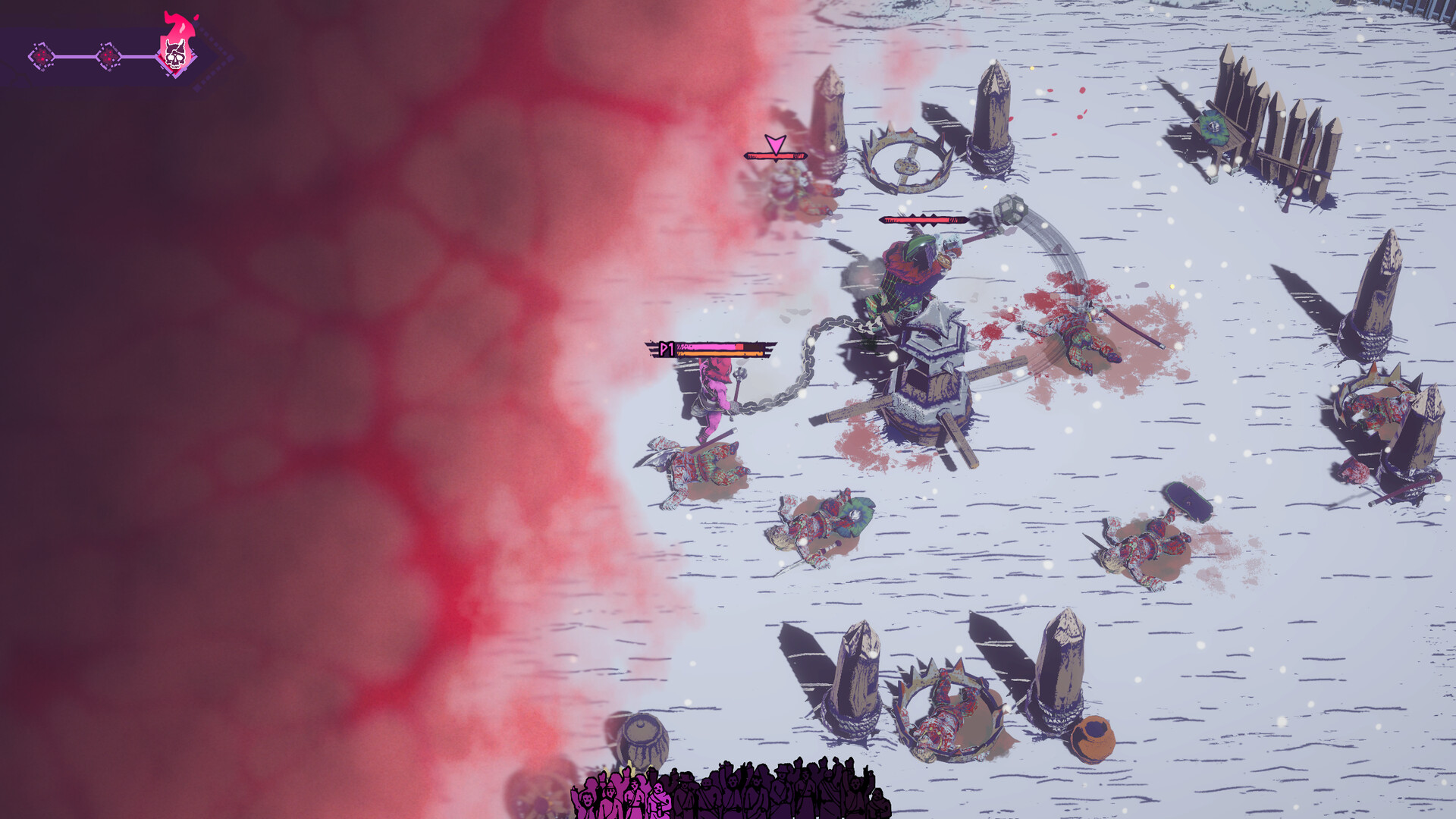
Official screenshot · Source: Steam store
A useful Chained Beasts trailer has to answer three questions in the first minute. Can you fight with the room, not just a combo list? Does the chain help as often as it hurts? Do injuries and bosses make the next run feel different, or is every bout a reskin? The studio’s own feature write-up on the Featherweight Games page for Chained Beasts is the clearest public brief for those answers. Collected reference material for this piece included that page and no video transcript, so the notes below stick to what the developer has actually published rather than invented timestamps or view counts.
| Question a viewer should ask | What the official pitch implies | What footage would need to prove |
|---|---|---|
| Is combat only button-mashing? | You can slash, or turn props and hazards on enemies | A clear beat where the room, not the sword, finishes the fight |
| Is co-op cosmetic? | Four friends are physically chained and can trip foes or snag on pillars | Both a failed tangle and a successful setup in the same clip |
| Does a run have memory? | Wounds, crowd favor, gear, skills, and new characters change the path | A fighter visibly impaired, then still dangerous |
| Is the goal just “survive today”? | Fame leads toward Rome, freedom, or revenge | A boss framed as a gate, not a random elite |
What the Pitch Puts in the Opening Seconds
Gladiator games often open on a slow pan of a sand pit and a crowd. This one has a sharper hook if the first action is messy. The published combat pitch is environmental as much as martial: you hack at opponents, but you can also throw pottery, shove a body into pottery, drive someone into spikes, or dump them into a snake pit. Ranged play exists, with a catch that trailers love and players hate to learn late. Throw the weapon and you had better already own a spare, or the next second is a fistfight you did not plan.
That last rule is the kind of system a Chained Beasts trailer should not bury under music. Weapon count is a resource. Distance is a gamble. The environment is a third combatant that does not care whose side started the shove. If a clip only shows clean duels on empty sand, it is underselling the page.
| Approach | What you spend | Typical payoff | Failure mode |
|---|---|---|---|
| Close slashing | Stamina, positioning, and a weapon in hand | Reliable damage when you control spacing | You eat hazards meant for the other fighter |
| Thrown urns and bodies | A prop, or the enemy’s own momentum | Burst control and comic, brutal finishes | You whiff and stand in the open |
| Spike walls and snake pits | A charge or shove lined up with the map | High damage without a long combo | You get reversed into your own trap |
| Thrown weapons | The weapon itself until you recover another | Reach against kiters and clustered foes | You are suddenly unarmed |
Practical viewing tip: pause on any throw. Count weapons before and after. If the fighter immediately pulls a backup, the game is teaching the rule. If the camera cuts away, you still do not know whether empty hands are a real problem.
Chains, Four Friends, and Fights You Cannot Solo-Brain
The co-op fantasy is not “four hitboxes near each other.” The page says you gather four ferocious friends and get chained together in cruel, creative ways. Poor timing wraps the group around a pillar or something worse. Shared timing lets you trip enemies and flip a losing scrum. That is a locomotion puzzle welded to a brawler.
A Chained Beasts trailer that only shows four people swinging in parallel is missing the mechanic that makes the title literal. Look for the chain as a visible actor: taut when someone sprints, slack when the group bunches, wrapped when someone orbits a column. Audio matters too. Callouts should be about facing and speed, not only target markers.
| Coordination state | What the chain is doing | Likely result | Habit that prevents it |
|---|---|---|---|
| Split sprint | Line goes tight across open sand | Someone gets dragged off their attack | Agree on a lead and a max gap |
| Orbiting cover | Chain catches a pillar | Group locks itself in place | Circle the same direction, or don’t circle |
| Synced shove | Line crosses an enemy’s legs | Trip, then a focus fire | Call the trip before the swing |
| Panic scatter | Everyone reacts to a different boss cue | Tangle plus free hits on the slowed player | One caller owns “break” versus “hold” |
Four bodies on one leash also changes how you read difficulty. A strong player cannot simply out-DPS a bad angle if their allies are the anchor. That is closer to a cooperative puzzle than to a drop-in horde mode. If you are judging whether to bring a full group, treat pillar density and hazard edges as co-op content, not background art.
Short habits that match the published design:
- Pick a facing before the gate opens, so the first pull does not corkscrew the team.
- Treat thrown weapons as a group budget. One empty hand is a plan; four empty hands is a wipe.
- Use trips when an enemy is already stepping toward a spike line, not as a random stun.
- After a tangle, reset spacing before you chase. The chain punishes the second mistake faster than the first.
Bosses, Fame, and the Road Toward Rome
As fame rises, the pitch promises brutal bosses: arena heroes armed with every advantage, a stacked deck, and a win that moves you closer to Rome plus a shot at freedom or revenge. That is a campaign spine inside a roguelike loop. Day-to-day fights build a reputation. Reputation unlocks someone who was built to end your run. Beating them is not a loot firework only; it is a step on a geographic and moral track.
No public boss roster sits in the source used here, so names, health bars, and phase charts would be guesswork. What you can evaluate from a Chained Beasts trailer is framing. Does the boss enter with gear, hazards, and crowd rules the player does not have? Does victory cut to a map, a gate, or a choice between leaving and settling a score? If the clip ends on a slow-motion kill with no consequence, the Rome hook is still only copy.
| Story beat from the pitch | Player-facing meaning | Trailer evidence that would confirm it |
|---|---|---|
| Fame rises | Ordinary wins change who you are allowed to face | A visible reputation or billing change between bouts |
| Bosses hold every advantage | The fight is asymmetric on purpose | Extra weapons, arena control, or crowd bias on the boss |
| Deck is stacked | Fair play is not the fantasy | Hazards that favor the champion until you steal them |
| Rome, freedom, or revenge | The meta goal is not endless sand | A destination or a branching motive after the win |
For planning a watch party, split the clip into “job fight” and “name fight.” Job fights should teach urns, snakes, and the chain. Name fights should show that those tools still matter when the opponent is famous. If the boss ignores the room, the systems are siloed, and the pitch is softer than it reads.
Wounds, Potions, Surgery, and Why Runs Diverge
Each day in the arena adds misery you carry forward. The examples on the page are specific enough to preview tone: a limp, a missing left eye, hallucinations only you can see. Relief exists, and it is suspicious. Potions dull pain but can leave worse afflictions. Surgery is floated as another answer, which implies a gamble rather than a free heal.
This is the section where a Chained Beasts trailer can separate itself from slapstick arena comedy. Persistent harm changes animation, aim, and what you believe is on the sand. A limp is a movement tax. A lost eye is information loss. Hallucinations are a trust problem: the player and, in co-op, the friends on the chain may not share the same picture of the pit. That last point is nasty in a good design sense. If one fighter flails at nothing, the chain still moves.
| Affliction type (as described) | Gameplay pressure | Why potions are not a free undo | What to watch in footage |
|---|---|---|---|
| Painful limp | Worse spacing and slower escapes from hazards | A remedy can add a harsher status | Uneven gait after a match, not only during it |
| Missing eye | Weaker reads on flanks and throws | You may trade sight for pain relief | UI or camera that hides one side |
| Private hallucinations | You attack ghosts and ignore real threats | Side effects can outlast the potion | Allies reacting to a swing that hits air |
| Surgical gamble | A deliberate, risky fix instead of a sip | The page frames surgery as a maybe, not a cure-all | A choice screen with a visible downside |
There are no drop rates or potion names in the source, so treat any “best brew” list you see elsewhere as unverified until the game or a real trailer shows the item. What you can plan now is a decision rule: if a status breaks coordination, fix it before you buy damage. A chained team dies to the slowest honest read, not to the lowest sword damage.
Progression sits beside the misery so the loop is not only punishment. Experience forges a harder fighter. You learn skills, win the crowd so spectators back you, bank money for arms and armor, and unlock new characters with strong abilities. Every run asks for a different path. That last line is the roguelike contract: knowledge carries over in your head, but the route does not repeat cleanly.
| Lever | What you invest | What you get back | Why a trailer should show it once |
|---|---|---|---|
| Skills | Arena experience | New ways to beat a stacked fight | A move that did not exist in the opening bout |
| Crowd favor | Style, risk, or spectacle | Help from the stands | A visible assist, not just louder cheering |
| Money and shops | Cash from survival | Weapons and equipment that swing a bout | A purchase that appears in the next round |
| New characters | Unlocks across runs | Different abilities on the same chain | A second fighter with a non-identical kit |
| Route variance | Willingness to abandon a favorite plan | A path that does not copy the last win | Two runs with different maps or billing |
Crowd favor is easy to fake with audio. Look for a mechanical tell: a thrown item from the seats, a brief opening, a penalty on the boss. If the stands never touch the sand, “they will always have your back” is still a slogan.
How to Judge the Next Clip Without Getting Spoiled by Hype
Use a second pass with the sound down, then a third with sound up and your eyes on the chain only. Silent viewing exposes whether combat is readable. Chain-only viewing exposes whether co-op is a system. Together they tell you if a Chained Beasts trailer is marketing sizzle or a playable argument.
Score the clip yourself. You do not need a public review to do it.
- Environment kill: one clear prop or hazard finish.
- Empty-hand lesson: a throw that costs the weapon.
- Chain fail and chain success: tangle, then a trip.
- Boss advantage: something the player side lacks.
- Carryover wound: an injury that survives the bout.
- Suspicious heal: a potion or surgery choice with a downside.
- Meta goal: Rome, freedom, or revenge shown as more than a caption.
- Different path: any hint that the next day is not a rematch on the same terms.
Six or more of those eight, shown rather than subtitled, means the footage matches the page. Three or fewer means you are still looking at a mood piece. That standard is stricter than “the art looks good,” and it respects your time.
No player experience or community reports were included in the source set for this article, so there is no verified note here about difficulty spikes, match length, or how often the chain actually saves a run. When those reports show up, weigh them against the eight checks above. A complaint that “we wrapped a pillar and died” may be the mechanic working. A complaint that “we never felt the chain” means the pitch and the build have drifted apart.
Until a full public video is paired with this write-up, the Featherweight page remains the authority for scope: gladiatorial combat, chained friends, brutal bosses, ghastly wounds, and character forged by struggle. Treat any trailer that contradicts those pillars as either an old prototype or a different game wearing the same name.
FAQ
Is there a Chained Beasts trailer transcript in this breakdown?
No. The reference set used here had the official Featherweight Games feature page and zero video transcripts. This article explains what that page commits the game to, and what a Chained Beasts trailer would need to show for the pitch to hold up on screen.
Is Chained Beasts a solo game or a co-op game?
The published design centers on gathering four friends who are physically chained together. Solo play is not described in the source. Coordination is part of combat: you can tangle on the scenery or trip enemies if you move as a group.
Do injuries reset after each match?
The page says each day leaves new wounds, with examples like a limp, a missing eye, and hallucinations. Potions can ease pain and also cause worse problems. Surgery is mentioned as another possible route, not as a guaranteed clean heal.
What is the long-term goal beyond winning a single bout?
Fame brings harder arena heroes who start with the advantage. Beating them moves you toward Rome and a chance at freedom or revenge. Along the way you build skills, crowd support, purchased gear, and new characters, and each run is meant to take a different path.
Related Guides
Chained Beasts release date trailer Breakdown
See what the Chained Beasts release date trailer shows about co-op chains, arena combat, wounds, and the launch day the narration never states.
Chained Beasts Launch Date: What the Trailer Shows
The Chained Beasts launch date is not in the trailer transcript. See confirmed co-op roguelite details and how to verify the release.
Chained Beasts console: PS5 Co-op Gladiator Guide
Plan a Chained Beasts console run on PS5: chain co-op, arena tools, wounds, bosses, and tips before you gather a party.
Chained Beasts Demo Download: Steam Guide 2026
Download the Chained Beasts demo on Steam, check PC specs, and learn what the 2026 co-op gladiator roguelike demo includes.
Chained Beasts coop: Chains, Builds, and Team Tips
Chained Beasts coop explained: chain layouts, afflictions, shared shops, punch builds, and team tips from early player runs.