Chained Beasts local co op: Couch Run Guide
Chained Beasts local co op guide covering roles, chain callouts, crowd score, shared gold, and affliction picks.
Why the chain is the real opponent
Two players, one tether, and a crowd that grades the show: that is the hook that makes Chained Beasts local co op worth clearing the coffee table for. Chained Beasts local co op turns a Roman gladiator roguelike into a shared-screen problem, where your partner's dodge can drag you into a spear line. If you want a couch run that rewards talk instead of silent grinding, the loop below is what a full clear actually demands.
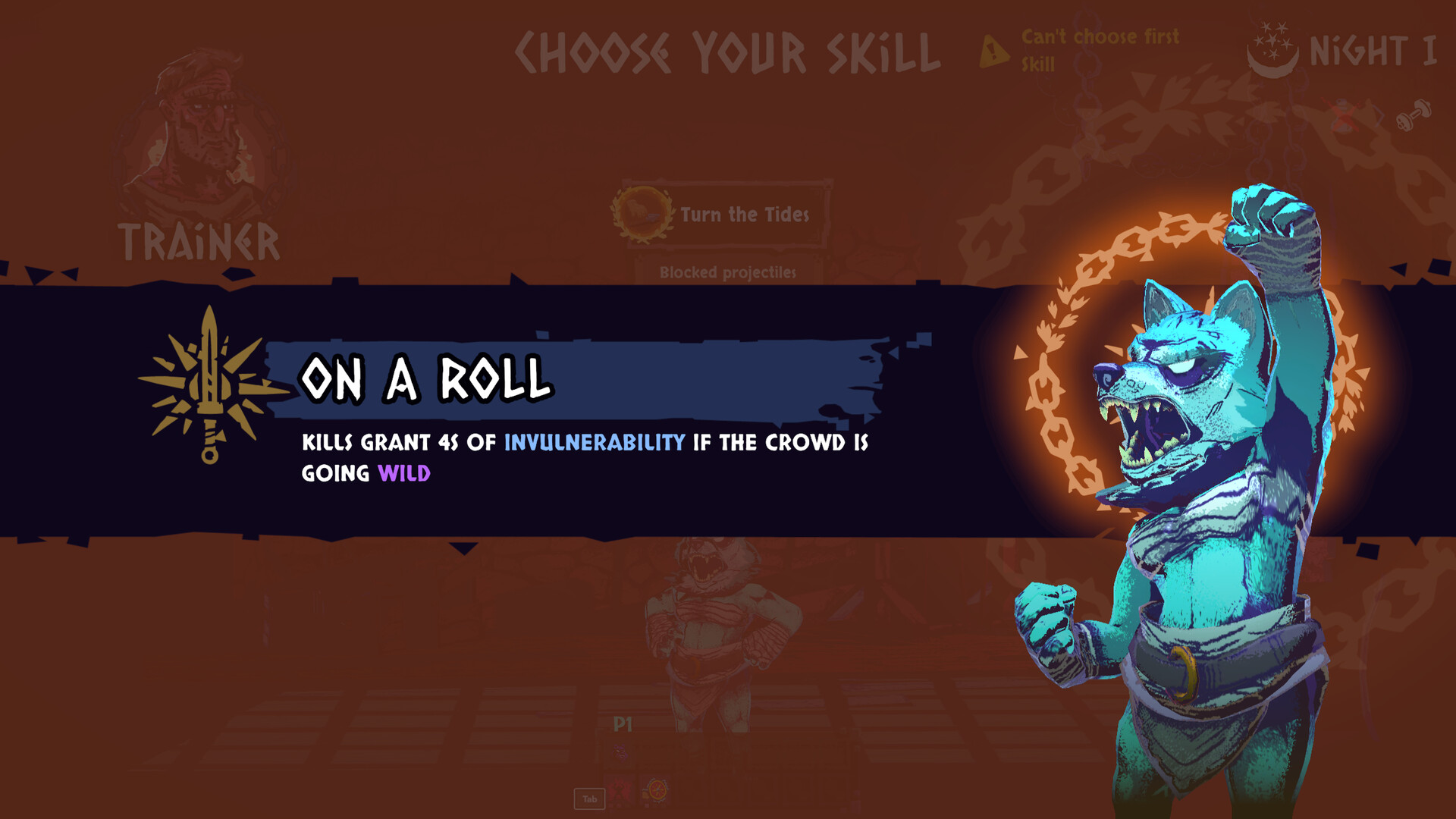
Official screenshot · Source: Steam store
Most local multiplayer lets you freelance inside your own hitbox. This one treats distance as a resource. Drift too far and you miss a shield pickup, a carry, or the throw you just aimed. Drift too close and a flail, a hurled sword, or a floor trap catches both bodies. Player experience from a duo that played a full path, from a prisoner camp to a capital rebellion, shows the tether turning on and off by room. Some fights start linked. Some do not, which turns a chain-kill job into a solo errand. Read the spawn, then talk.
Distance control is the skill that decides Chained Beasts local co op fights long before your build does. Controller prompts in that session were gamepad buttons, so plan on pads rather than a keyboard split. To see what else is shipping in the same shared-screen lane, browse the Steam Local Co-op category and filter for games you can sit down with tonight.
Pick jobs, then pick colors
For Chained Beasts local co op, the first menu is a role split. Fighters can present as male or female, and you can recolor them, but matching colors force the other person onto a different shade. Outfits unlock through challenges. One early cosmetic, tied to taking no damage in the opening city, died the moment a player ate two hits. Leave perfect-run costumes for a later attempt.
The traits below are what that duo read on their screens. Treat them as session notes, not a patched wiki.
| Fighter | Trait reported in-session | Best couch job | Easy way to ruin it |
|---|---|---|---|
| Rhino | Shields last twice as long; 30% less damage taken | Anchor, block, short fury windows | Standing in a partner's throw |
| Ibex | Faster movement; dodges spend less stamina | Throws, trips, contract kills | A wound that hurts when you move |
| Wolf | Body parts deal about double after a dismember | Cleanup with ripped-off weapons | Blocking the throw lane |
| Panther | More damage, less health, bigger specials | Burst in unchained rooms | Eating a net with no backup |
| Bear | More health, slower, fury after you are hit | Second front liner | Stacking a limp on top |
| Eagle | Strong throw after a melee kill | Finisher, once unlocked | Camping one weapon all bout |
Rhino plus Ibex is the pairing that opened their clear. The anchor drafted fury on a successful block. In the moment they confirmed fury as about 50% more damage, then added a passive poke on the block input. The Ibex drafted crit instead of block tools, starting near 20% on all attacks and later pushing a much higher base crit, and spent stamina on dodges.
Unlocks after the first act
They did not stay on those two kits. Clearing the first act unlocked the Wolf, built around improvised weapons made from enemy parts. Later screens described Panther and Bear. The results screen added an Eagle throw bonus, an axe in the armory pool, and Legionnaire difficulty, which makes the first city stricter and can turn hard training into new afflictions. Player experience put four characters unlocked, two still locked, and roughly 100 XP each, short of the next character level. The replay is the roster, not one perfect build.
How scoring, jobs, and gold actually share
Mid-run shops are where Chained Beasts local co op gets generous, and where one sloppy contract taxes both of you. After a bout the crowd moves from angry through bored and content up to wild. It wants speed and variety: thrown weapons, traps, and smashing someone with an urn or any other prop on the sand. A player who only does the one thing they are good at can lead the kills and still post the worse show.
| Spectacle action | What it feeds | Co-op habit |
|---|---|---|
| Throw a weapon | Variety and pace | Call the lane first |
| Trap or trip | Control the crowd likes | Do not body-block the arc |
| Smash with an urn or prop | A big visual hit | Check your partner is clear |
| Mix weapons | Variety score | Scavengers beat one-weapon tanks |
| Take less damage | The survival half of the grade | Anchors should not hero-chase |
| Exact contract kills | Gold, if you stop on the number | Count out loud |
An early job paid 60 gold for exactly three throw kills, and only one player could take it. Miss the number, or overshoot it, and the penalty was a lasting injury along the lines of needing a cane. The thrower set enemies up, landed three, and had to stop. Name a contract owner before the gate drops, then say the count so nobody "helps" you over the line.
Gold is shared. Buy an item once and it joins the pool for every gladiator, but each fighter still equips one piece. They skipped a flashy explosive bow and a mob gift that might repay itself, and took a team damage bump they called a grinding wheel, about 20% for everyone. A longer chain later beat pure trip damage, because spacing fails more runs than low damage. On the last stretch they also bought paid medicine, so the next heal could be water instead of another skull, plus pamphlets that toss extra clubs toward the crowd favorite.
| Purchase | Who it helps | Take it when |
|---|---|---|
| Team damage increase | Both fighters, always | Early, if the other option is a gamble |
| Double job payout | Whoever owns contracts | You already hit exact kills |
| Longer chain | Trips, squeezes, spacing | Before a chain-kill objective |
| Crit weapon | Finisher or thrower | You already draft crit |
| Zero ally damage | Chaotic pairs | Friendly fire is your top death |
| Extra clubs from the crowd | The current favorite | You want free variety in a finale |
| Paid medicine | The wounded role | Affliction slots are already ugly |
Compare cards without turning the score into a fight. In their opener, one fighter had more carnage and the other had the better score with less damage taken. Later, the steady shield user often carried kills while the scavenger, throwing every pickup, farmed variety and crowd favor. Both jobs are real. Assign them on purpose.
Afflictions, surgery, and commits you cannot share
Afflictions are the tax on healing in Chained Beasts local co op. A potion can top you off and brand a permanent problem, with skulls marking how severe it is. Water was the small safe drink, and they used it whenever a full heal would break the build. You generally cannot both take the same draught. Menus also differ: one player may see cash in exchange for a lung, while the other sees a risky fix that steals a different bone to do the repair.
| Affliction pattern | Ruins this job | Practical workaround |
|---|---|---|
| Throws veer, or aim often fails | Dedicated thrower | Stop living on precise shots |
| Damage while you move | Mobile trips and chain loops | Let the healthier partner run |
| Limp, hobble, or a broken foot | Anyone who must reposition | Do not stack it on a leg wound |
| Dodge becomes a short lunge | Mobile kit | Skip it; the dodger cannot afford it |
| Disarm on a miss or a blocked hit | People who hold one weapon | Punch follow-ups, or stun immunity |
| Burning until you dodge | Late rooms full of fire | Dodge the instant you ignite |
| Slow after holding a weapon ~8 seconds | Camping one shield and mace | Fine if you throw and never hold |
| Forced walking | Already bleeding when you move | Refuse it |
Surgery is the refund window, and it is not flavor-free. In that run, an arm rod meant blocking without a shield in hand. A skull plate meant stun immunity, which also shut off an effect that stunned and disarmed them whenever a block stuffed their attack. Other cuts stripped skulls off a leg wound, sold a lung, or rolled a random skill. Removing a three-skull wound is usually the correct choice. They sometimes kept a silly curse anyway, because it did not touch the plan they were actually playing.
Draft the next talent into the curse you kept:
- Anchors want fury on a successful block, then anything that punishes the enemy who just bounced off the shield.
- Throwers want crit, longer stuns, and heavy-object perks so urns and bodies do not slow the toss.
- If your ally owns the crowd, vigor when they go wild is free value. If you are the one face-tanking, a sturdier stance is simpler.
- Do not double a talent you already own just because the icon looks new. One player nearly stacked the same punch crit twice.
- Test passives immediately. Their spike-shield buy was not a shield. It was a poke, and they still had to loot a real one off the sand.
Callouts, hazards, and a fourth player
Good Chained Beasts local co op is a shared vocabulary. The opening drill already covers the verbs: grab a weapon, block until the shield cracks, charge a special, dodge, wait for stamina, throw, carry a downed partner, and hurl that partner when they ask. Friendly fire is on from the first practice dummy. A head-on charge between allies feels like a betrayal because it is one.
Keep the phrases short.
- "Throwing" before a sword, spear, or halberd leaves your hand.
- "Reel in" before the tether hits max range.
- "Three, stop" the moment an exact-kill job is done.
- "Net" or "fire" so the free player cuts rope, or the burning player dodges.
- "Trap on the chain," because a snagged tether links you again.
Chain kills are the flashy contract and a health tax. The goal in their run was to loop the chain, squeeze, and finish the target. A squeeze notification can fire before the enemy actually dies. They had to walk off the body to complete the cut. The mobile fighter did the looping, because the partner with the leg wound could not afford the steps, and the room still hurt. Clear archers before you start dancing around one victim.
| Hazard | What the duo ran into | Call to make |
|---|---|---|
| Max chain length | Failed pickups and stalled carries | "Reel in" |
| Ally collision | Charges and spins hit the partner | "Coming through" |
| Nets | The victim cannot act | "Cut me out" |
| Chain traps | You get linked again | "Trap on chain" |
| Fire patches | Chip damage that becomes a wipe | "Roll" |
| Backline ballista | Ranged pressure while you brawl | "Back line" |
| Guarded late targets | Senators around a final boss | "Shields first" |
| Pillars and logs | The tether wraps the set | "Don't circle the post" |
The late sequence raises the same problems instead of inventing new ones. A brute with a log wrapped people around pillars. Nets left a fighter helpless until help arrived. Fire sat on the floor. A hidden blade showed up as a rebellion started, then a captain fight and an emperor behind senator shields. The senators were the breakable targets. They closed on a double execute, with one of them still burning. You do not need a full health bar. You need the chain out of the hazard.
Player experience at the end of that clear put the mode at as many as four local players. Two extra people means more tethers and less free sand. Assign seats in the tutorial: one anchor, one tripper, one contract thrower, and one floater whose only job is nets, shields, and staying out of lanes. Their duo stat card made the builds public, including 113 critical hits, 44 backstabs, and 1,499 mace damage on the heavier fighter. Those are one pair's receipts, not a balance target. Legionnaire, unlocked after the win, is the harder second night, not the teaching run.
FAQ
Can Chained Beasts local co op go past two players?
Yes, according to the players in that session: the same mode can seat four. Confirm it on the build you own before you invite two more friends. Extra fighters multiply chains, friendly fire, and people blocking throws. Give each person a job before the first bout, or the sand turns into a knot.
Do both players share kills, gold, and items?
Gold is shared, and a shop unlock applies to every gladiator on the run. Kills, crowd favor, damage taken, and variety are tracked per fighter, and some contracts allow only one owner. Gear still respects a single equipment slot, so two different purchases are how you outfit two roles, not how you double one person.
What should we drink between arenas?
Water, unless a big heal's curse only touches a job you were not using. Full potions apply skull-rated afflictions, and both players usually cannot take the same one. If you already take damage while moving, refuse anything that forces more walking or adds a limp. A surgery that deletes a bad wound is often worth more than a new damage perk.
Why did fewer kills beat our carnage score?
The crowd grades a show, not a damage meter. Throws, traps, prop smashes, and staying healthy move you from bored to wild. A specialist can win the fight and lose the card. Split the work: one player farms reliable kills, and the other is allowed to look messy on purpose.
Related Guides
Chained Beasts coop: Chains, Builds, and Team Tips
Chained Beasts coop explained: chain layouts, afflictions, shared shops, punch builds, and team tips from early player runs.
Chained Beasts couch co op: local play guide
Player-tested look at Chained Beasts couch co op: chains, crowd scores, shared gold, afflictions, and local multiplayer tips.
Chained Beasts crossplay: Who Can Play Together
How Chained Beasts crossplay works for 1-4 player co-op, which PC platforms connect on Steam, and how couch play fits in.
Chained Beasts full release date: Oct 15, 2026
Chained Beasts full release date was October 15, 2026. Check price, co-op setup, the sale window, and the update roadmap.
Chained Beasts console: PS5 Co-op Gladiator Guide
Plan a Chained Beasts console run on PS5: chain co-op, arena tools, wounds, bosses, and tips before you gather a party.